Name: Nerio Mark C.
Introduction Douglas Engelbart
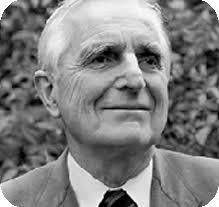
Biography
One of the significant figures in the history of Human-Computer Interaction (HCI) is Douglas Engelbart, who is known for his groundbreaking work on interactive computing systems. He is credited with inventing the computer mouse and pioneering early graphical user interfaces. His contributions laid the foundation for many of the interactive technologies we use today.
Certainly, Douglas Engelbart’s seminal work can be found in his research paper titled “Augmenting Human Intellect: A Conceptual Framework” which was published in 1962. In this paper, he introduced his visionary ideas about how computers could be used to augment human intellect and enhance collective problem-solving. This paper laid the groundwork for his later developments in the field of Human-Computer Interaction.
Contribution to HCI
One of the significant figures in the history of Human-Computer Interaction (HCI) is Douglas Engelbart, who is known for his groundbreaking work on interactive computing systems. He is credited with inventing the computer mouse and pioneering early graphical user interfaces. His contributions laid the foundation for many of the interactive technologies we use today.
Certainly, Douglas Engelbart’s seminal work can be found in his research paper titled “Augmenting Human Intellect: A Conceptual Framework” which was published in 1962. In this paper, he introduced his visionary ideas about how computers could be used to augment human intellect and enhance collective problem-solving. This paper laid the groundwork for his later developments in the field of Human-Computer Interaction.
Timeline of Achievements
Douglas Carl Engelbart (January 30, 1925 – July 2, 2013) was an American engineer and inventor, and an early computer and Internet pioneer. He is best known for his work on founding the field of human–computer interaction, particularly while at his Augmentation Research Center Lab in SRI International, which resulted in creation of the computer mouse, and the development of hypertext, networked computers, and precursors to graphical user interfaces. These were demonstrated at The Mother of All Demos in 1968. Engelbart’s law, the observation that the intrinsic rate of human performance is exponential, is named after him.
Multimedia
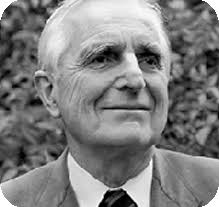
Born
Douglas Carl Engelbart
January 30, 1925
Portland, Oregon, U.S.
Died
July 2, 2013 (aged 88)
Atherton, California, U.S.
Alma mater
Oregon State University (BS 1948)
University of California, Berkeley (MS 1953, PhD 1955)
Known for
Computer mouse
Hypertext
Groupware
Interactive computing
Awards
National Medal of Technology (2000)
Lemelson–MIT Prize
ACM Turing Award (1997)[1]
BCS Lovelace Medal (2001)
Norbert Wiener Award for Social and Professional Responsibility
Computer History Museum Fellow Award (2005)[2]
NAE Member (1996)
Scientific career
Fields
Human–computer interaction[3]
Inventor
Institutions
SRI International
Tymshare
McDonnell Douglas
Bootstrap Institute/Alliance[4]
The Doug Engelbart Institute
Thesis
A Study of High-Frequency Gas-Conduction Electronics in Digital Computers (1956)
Doctoral advisor
Paul L. Morton[5]
John R. Woodyard[1]
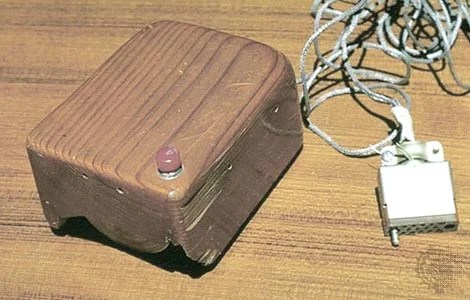
first computer mouse
Douglas Engelbart invented the computer mouse in 1963–64 as part of an experiment to find a better way to point and click on a display screen. Fashioned at the Stanford Research Institute, it had a carved wood casing and just one button. A subsequent model had three buttons, and Engelbart would have provided more if there had been room for more than the three microswitches to which the buttons were connected
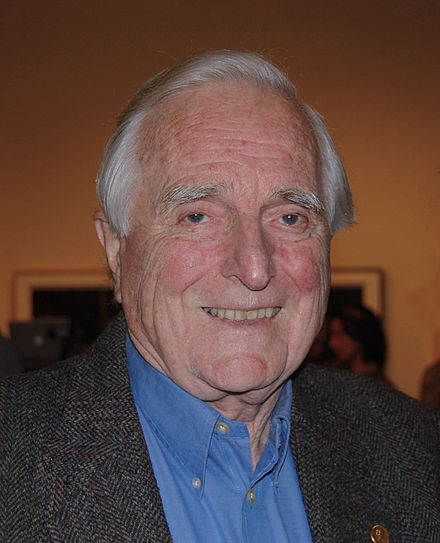
Interactive Elements (Quizzes, Survey
Engelbart Tech Quiz.
- What is Douglas Engelbart best known for? A.) Inventing the computer mouse B.) Developing the first personal computer C.) Creating the World Wide Web D.) Discovering the concept of artificial intelligence
- In which year did Engelbart demonstrate the computer mouse for the first time? A.) 1956 B.) 1968 C.) 1972 D.) 1980
- Apart from the mouse, what other major technology did Engelbart help develop? A.) Graphical user interfaces B.) Touchscreen technology C.) Virtual reality headsets D.) Voice recognition software
- Engelbart is also known for his pioneering work on what important concept in computing? A.) Cloud computing B.) Hypertext C.) Blockchain technology D.) Quantum computing
- Which of the following is not a concept associated with Engelbart’s work? A.) Augmented human intelligence B.) Distributed computing C.) Nanotechnology D.) Collaborative computing
Feel free to answer these questions, and I can let you know how you did!
Engelbart’s career was inspired in December 1950 when he was engaged to be married and realized he had no career goals other than “a steady job, getting married and living happily ever after”.[15] Over several months he reasoned that:
- he would focus his career on making the world a better place[16]
- any serious effort to make the world better would require some kind of organized effort that harnessed the collective human intellect of all people to contribute to effective solutions.
- if you could dramatically improve how we do that, you’d be boosting every effort on the planet to solve important problems – the sooner the better
- computers could be the vehicle for dramatically improving this capability.[15]
Reference
- Thierry Bardini. “Turing Award Winners: 1997”. Association for Computing Machinery (ACM). Archived from the original on June 30, 2013. Retrieved July 4, 2013.
- ^ Jump up to:a b “Douglas C. Engelbart”. Hall of Fellows. Computer History Museum. Archived from the original on July 2, 2012. Retrieved June 17, 2012.
- ^ Engelbart, D. C. (1995). “Toward augmenting the human intellect and boosting our collective IQ” (PDF). Communications of the ACM. 38 (8): 30–32. doi:10.1145/208344.208352. S2CID 8192136. Archived (PDF) from the original on May 1, 2015. Retrieved September 1, 2015.
- ^ “The Doug Engelbart Institute”. The Doug Engelbart Institute. Archived from the original on July 14, 2012. Retrieved June 17, 2012.
- ^ “Ph.D. Dissertations – 1955”. Electrical Engineering and Computer Science, College of Engineering, University of California Berkeley. Archived from the original on May 1, 2015. Retrieved July 3, 2013.
- ^ “the Doug Engelbart Institute website”. Archived from the original on December 9, 2018. Retrieved December 9, 2018.
- ^ Lowood, Henry (December 19, 1986). “Douglas Engelbart Interview 1, Stanford and the Silicon Valley: Oral History Interviews”. Stanford University. Archived from the original on February 18, 2012. Retrieved December 30, 2020.
- ^ Jump up to:a b Dalakov, Georgi. “Biography of Douglas Engelbart”. History of Computers. Archived from the original on July 11, 2012. Retrieved July 29, 2012.
- ^ Madrigal, Alexis C. (July 8, 2013). “The Hut Where the Internet Began”. The Atlantic. Archived from the original on July 9, 2013. Retrieved January 9, 2022.
- ^ “Citation Recipients” (PDF). Sigma Phi Epsilon. p. 5. Archived from the original (PDF) on December 24, 2013. Retrieved August 14, 2013.
- . Sigma Phi Epsilon. p. 5. Archived from the original (PDF) on December 24, 2013. Retrieved August 14, 2013.
Source
 Mark C. Nerio Site